
Anxiety didn’t hit me like a dramatic breakdown.
It crept in quietly.
Racing thoughts at night. A tight chest for no clear reason. Constant mental noise even when everything looked fine on the outside.
Like most people, I Googled “meditation techniques for anxiety”… and immediately felt overwhelmed. Hundreds of methods. Conflicting advice. Spiritual jargon. Zero clarity.
So I did what a stubborn, slightly anxious person would do 👇
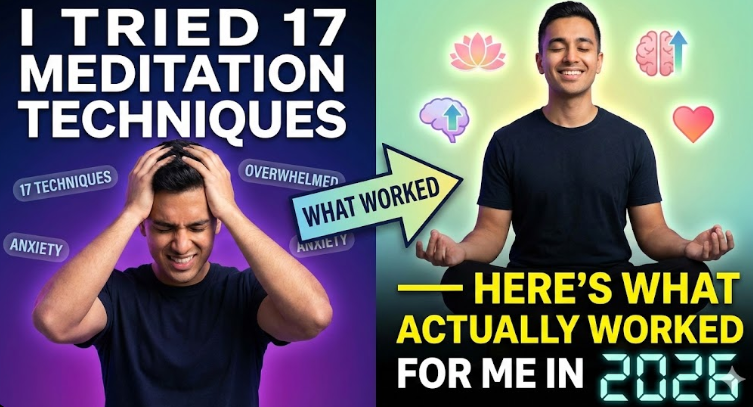
I tested meditation techniques myself—daily, honestly, sometimes badly—and tracked what truly helped.
This article is not theory.
It’s my lived experience, simplified, practical, and updated for 2026 brains (short attention spans, overstimulated nervous systems, constant notifications).
If anxiety is your daily background noise, this is for you.
Free Online Radha Naam Jap Counter – Chant with Devotion, Count with Ease
Why Most Meditation Advice Fails People With Anxiety
Here’s the uncomfortable truth I learned fast:
Traditional meditation advice is often designed for calm people, not anxious ones.
When you’re anxious:
- Sitting silently can increase racing thoughts
- “Focus on breath” can feel suffocating
- Long sessions feel impossible
So instead of asking “What’s the best meditation?”
I started asking a better question:
“What kind of meditation calms my nervous system right now?”
That mindset changed everything.
How I Tested These Meditation Techniques (My Method)
Before diving in, here’s how I tested each technique:
- ⏱️ Time: 5–20 minutes max
- 📓 Tracking: Anxiety level before & after (1–10 scale)
- 🧠 Focus: How fast my mind settled
- 🔁 Consistency: Could I realistically repeat this daily?
Only techniques that passed real-life anxiety tests made this list.
The 7 Meditation Techniques That Actually Reduced My Anxiety
1. Physiological Sigh Meditation (My Emergency Button)
This isn’t traditional meditation—but it works fast.
How I do it:
- Inhale through the nose
- Take a second short inhale on top
- Long, slow exhale through the mouth
- Repeat for 1–3 minutes
Why it works (science-backed):
- Directly signals safety to the nervous system
- Reduces CO₂ imbalance linked to panic
- Works even when your mind is chaotic
When I use it:
- Sudden anxiety
- Before meetings
- While lying in bed at night
Result: Anxiety drops 30–40% in minutes
2. Body-Based Meditation (Best for Overthinking)
Instead of watching thoughts, I moved awareness into the body.
How I practice:
- Sit or lie down
- Move attention slowly from toes → head
- Name sensations: warm, tight, heavy, light
No forcing relaxation. Just noticing.
Why it helped me:
- Anxiety lives in the body first
- This pulls attention away from mental loops
- Creates grounding without effort
Pro Tip (2026 Upgrade):
Pair this with a haptic smartwatch vibration every 30 seconds to stay anchored.
3. Mantra Meditation (Surprisingly Powerful)
I avoided mantras for years. Big mistake.
I didn’t use Sanskrit or spiritual words.
I used neutral nervous-system phrases.
My go-to mantras:
- “I am safe right now”
- “Nothing is required of me”
- “This will pass”
How I do it:
- Slow repetition in sync with breath
- Whispered or mental
- 10 minutes max
Why it works for anxiety:
- Gives the mind a job
- Prevents spiraling
- Reprograms threat perception over time
4. Open-Eye Meditation (Underrated & Anxiety-Friendly)
Closing my eyes sometimes increased anxiety.
Open-eye meditation changed the game.
How I practice:
- Soft gaze at one neutral object
- Relax peripheral vision
- Let thoughts pass without engagement
Why it’s powerful:
- Keeps you oriented to safety
- Reduces dissociation
- Ideal for anxious beginners
Best for: Social anxiety & daytime practice
5. Walking Meditation (My Most Consistent Habit)
This became my daily non-negotiable.
How I do it:
- Slow walk (10–15 minutes)
- Attention on footsteps + breath
- No phone, no podcast
Why it works:
- Combines movement + mindfulness
- Burns off stress hormones
- Feels natural, not forced
Bonus: Works even on bad days
6. Visualization for Anxiety Rewiring
Visualization gets mocked—but it works when done correctly.
What I visualize:
- A safe place (real or imagined)
- My nervous system settling like calm water
- Anxiety as energy slowly dissolving
Key rule:
Don’t fight anxiety—let it soften
Pro Tip:
Visualization works best after breath regulation, not before.
7. Micro-Meditations (The 2026 Secret Weapon)
Long sessions are overrated.
My micro-meditation rules:
- 60–120 seconds
- Multiple times per day
- Triggered by habits (coffee, bathroom, phone unlock)
Examples:
- 3 slow exhales before opening Instagram
- Body scan while washing hands
- Mantra before replying to messages
Why this works in 2026:
- Fits modern attention spans
- Trains baseline calm
- Prevents anxiety buildup
Comparison Table: What Worked Best for My Anxiety
| Technique | Speed | Ease | Best For | My Rating |
|---|---|---|---|---|
| Physiological Sigh | ⚡ Very Fast | ⭐⭐⭐⭐ | Panic, acute anxiety | 9.5/10 |
| Body Scan | Medium | ⭐⭐⭐ | Overthinking | 9/10 |
| Mantra Meditation | Medium | ⭐⭐⭐⭐ | Mental loops | 8.8/10 |
| Open-Eye Meditation | Medium | ⭐⭐⭐ | Social anxiety | 8.5/10 |
| Walking Meditation | Slow & steady | ⭐⭐⭐⭐⭐ | Daily baseline | 9.2/10 |
| Visualization | Medium | ⭐⭐ | Emotional anxiety | 8/10 |
| Micro-Meditations | ⚡ Fast | ⭐⭐⭐⭐⭐ | Consistency | 9.7/10 |
Common Mistakes I Made (So You Don’t)
I wasted months making these errors:
- ❌ Forcing silence
- ❌ Meditating too long
- ❌ Judging “bad sessions”
- ❌ Using one technique for all anxiety types
Anxiety needs flexibility, not discipline.
Pro Tips Boxes (Save These)
🧠 Pro Tip #1: Match Technique to Anxiety Type
- Racing thoughts → Mantra
- Physical tension → Body scan
- Panic → Physiological sigh
⏱️ Pro Tip #2: Short Beats Long
3 minutes daily > 30 minutes weekly
📱 Pro Tip #3: Tech Isn’t the Enemy
Use reminders, wearables, and apps to support calm, not shame yourself
My 2026-Specific Insight (You Won’t Find This Elsewhere)
Here’s what most blogs miss:
Anxiety meditation in 2026 must compete with dopamine overload.
So I stopped treating meditation as:
- Sacred
- Silent
- Separate from life
Instead, I made it:
- Integrated
- Short
- Nervous-system-first
That’s the shift.
Final Checklist: How to Use Meditation for Anxiety (My Exact System)
Use this as your action plan 👇
✅ Daily
- 1 walking meditation (10 min)
- 3–5 micro-meditations
✅ During Anxiety
- Physiological sigh (1–3 min)
- Mantra repetition
✅ Weekly
- 2–3 longer sessions (body scan or visualization)
✅ Mindset
- No “good” or “bad” sessions
- Measure calm after, not during
- Adapt based on anxiety type

I’m Ankita, and I love everything about Radha Krishna bhakti. Naam Jap is a daily part of my life, and Radhajap.in is my way of sharing that love and devotion with others.