
I want to tell you something that most travel guides about Barsana will never say.
When I first visited Barsana, I went as a curious pilgrim who had heard about the Lathmar Holi and wanted to experience it. I visited the Ladli Ji Temple, walked the lane leading up to it, saw the peacocks and the old buildings, ate some prasad, and took photographs.
I came back having seen Barsana. I had not felt it.
The second time, I went differently. I went early — before 6 AM, before the tourists arrived, before the souvenir sellers set up their stalls. I sat on the steps of the Ladli Ji Temple in the morning light. I did my naam jap there — Radhe Radhe — for forty-five minutes, watching the light change on the hills of Barsana.
That morning I understood something that no guidebook has ever been able to explain: Barsana is not primarily a place you visit. It is a place you sit in. The more still you become, the more it speaks.
This guide will give you everything practical you need to reach Barsana, see what matters, eat well, stay comfortably, and not get lost. But it will also give you what most guides cannot — the perspective of someone who has visited as a devotee seeking Radha Rani’s presence, not just a tourist checking off a destination.
What Is Barsana — Why It Is the Most Sacred Place for Radha Krishna Devotees
Barsana is a small town in Mathura district, Uttar Pradesh — approximately 50 kilometres from Mathura city and 42 kilometres from Vrindavan. By most conventional measures, it is an unremarkable small town. Narrow streets, old buildings, lots of monkeys, a main temple on a hill.
But Barsana is the birthplace of Radha Rani.
In the entire geography of Radha Krishna bhakti — in all the towns and temples and ghats of Braj Bhumi — there is no place that belongs to Radha Rani more completely than Barsana. This is where she was born. Where she grew up. Where the original leelas of her childhood with Krishna happened. Where her father Vrishabhanu and mother Kirtida lived.
In Vaishnava theology, Barsana holds a unique position: it is the birthplace not of a devotee but of bhakti itself. Radha Rani is the embodiment of perfect love and devotion. Her birthplace is therefore the birthplace of devotion. Coming to Barsana is coming to the source.
The saints of the Braj tradition teach that Vrindavan is where Radha and Krishna’s love played out. But Barsana is where Radha herself first appeared. It is the deeper source.
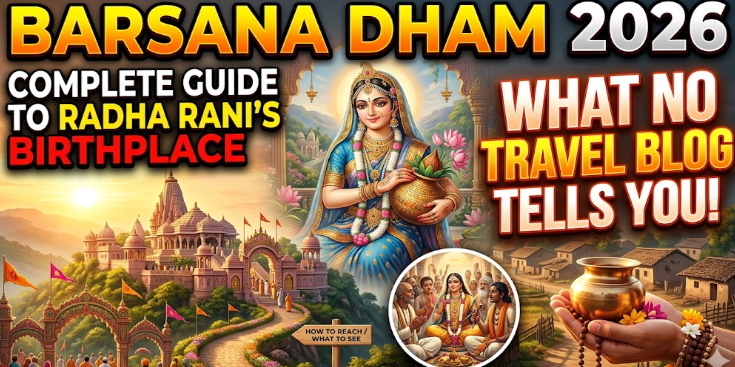
Ladli Ji Temple — The Heart of Barsana
The primary temple of Barsana is the Ladli Ji Temple — dedicated to Radha Rani as Ladli Ji, the beloved daughter. Ladli means the cherished one, the adored one, the daughter who is the centre of her family’s love. This is how Barsana knows Radha Rani — not as a divine consort, not as a cosmic principle, but as their beloved daughter.
The temple sits on a hill — Brahmagiri Hill — reached by climbing a flight of stone steps. The climb is not strenuous but it is significant. With each step you leave the ordinary world a little further below.
At the top you find the temple complex — old, warm-coloured stone buildings, courtyards, shrines to Radha’s companions the sakhis, and at the centre the main shrine of Ladli Ji. The idol here has a particular quality that is hard to describe but immediately felt: it is not grand or imposing. It is intimate. You feel as if you are being seen by someone who already knows you and already loves you.
Best time for darshan: The temple opens early — approximately 5:30 to 6:00 AM for morning darshan. This first darshan of the day, before the crowds arrive, is the most peaceful and the most devotionally accessible. Arrive before 6 AM if you can. The evening aarti (approximately 6:30 to 7:00 PM) is also extraordinary — the lamps, the songs, the atmosphere.
Barsana Lathmar Holi — The Most Unique Holi in the World
Barsana is globally famous for one thing above all: the Lathmar Holi. This is a Holi celebration unlike anything else in the world — and even if you cannot visit during this time, understanding what happens here gives you a deeper appreciation of Barsana’s spirit throughout the year.
The tradition goes back to Krishna’s visits to Barsana to tease the gopis — and specifically Radha and her companions. The gopis of Barsana became famous for defending themselves with sticks (lathis) against Krishna’s playful provocations.
In the Lathmar Holi celebration — which happens approximately one week before main Holi — men from the neighbouring village of Nandgaon (Krishna’s village) come to Barsana with colour and celebration. The women of Barsana welcome them with lathis. The men hold up shields. It is not combat — it is love expressed through play. Colour fills the air. The sound of Radhe Radhe rises from thousands of voices simultaneously.
Lathmar Holi 2026 has already passed (it was held in early March 2026). But Barsana continues throughout the year as a living pilgrimage town — and the energy of what that celebration represents never fully leaves.
How to Reach Barsana in 2026 — Complete Transport Guide
From Mathura (50 km)
Mathura is the nearest major city and railway junction. From Mathura city, Barsana is approximately 50 kilometres by road — about 1 to 1.5 hours depending on traffic.
By Bus: Government Roadways buses run between Mathura bus stand and Barsana. Frequency varies — approximately every 30 to 60 minutes during peak hours. Fare: ₹40 to ₹60 one way. Journey time: 1.5 to 2 hours including stops.
By Auto/Tempo: Shared autos and tempos run regularly from Mathura to Barsana via Govardhan route. ₹60 to ₹100 per person shared. Faster than bus.
By Private Cab: Most recommended for comfort and flexibility. Mathura to Barsana one way: ₹600 to ₹900 for a sedan. Book through Ola, Uber, or local operators. You can combine Barsana with Nandgaon and Govardhan Hill in one day by hiring a cab for the circuit.
From Vrindavan (42 km)
Vrindavan to Barsana is approximately 42 kilometres — about 1 hour by road. Hire a cab directly from Vrindavan (₹700 to ₹1000) or take a shared vehicle to Mathura and then connect to Barsana. Most devotees staying in Vrindavan do Barsana as a day trip — leave early, return by evening.
From Delhi (120 km)
Delhi to Barsana is approximately 120 kilometres — about 2.5 to 3 hours by road. The most practical route is Delhi to Mathura by train (frequent trains, 1.5 to 2 hours, ₹100 to ₹400) and then Mathura to Barsana by cab or bus. A direct car from Delhi costs approximately ₹2,500 to ₹3,500 one way.
Nearest Railway Station
There is no railway station in Barsana itself. The nearest stations are Kosi Kalan (approximately 20 km) and Mathura Junction (50 km). Mathura Junction has far better connectivity to all major Indian cities.
What to See in Barsana — A Devotee’s Itinerary
Ladli Ji Temple — 1.5 to 2 Hours
This is the primary reason to come to Barsana. Allow at least 1.5 to 2 hours here — not rushing through darshan but sitting, absorbing, doing naam jap. The temple complex has multiple shrines and courtyards. Explore them slowly. Visit the sakhi shrines on the hillside.
Maan Temple — 30 Minutes
On the opposite hill from Ladli Ji stands the Maan Temple — also called the Maan Mandir. This temple is associated with the ‘maan’ (sulking) leela of Radha — one of the most intimate stories of the Braj tradition where Radha is said to have sulked because of a misunderstanding with Krishna. The temple is quieter than Ladli Ji and carries a very specific, intimate atmosphere.
Vrishabhanu Kund — 20 Minutes
Vrishabhanu was Radha Rani’s father. The kund (sacred pond) associated with him is one of the original sacred water bodies of Barsana. Sitting near it quietly and doing a short jap session is one of the most peaceful practices available in Barsana.
Barsana’s Streets — Walk Slowly
The lanes and galis of Barsana are themselves worth walking slowly. Old havelis with painted walls. Small shrines in unexpected corners. The sound of bhajans from houses as you pass. Peacocks on rooftops. The occasional vendor selling Radha Rani prasad items. If you rush through these streets to get to the next sight, you miss what Barsana actually is.
Where to Stay in Barsana — Honest Advice
Barsana is a day trip destination for most visitors. Very few tourists stay overnight. But staying even one night — especially if you can be at the Ladli Ji Temple for the 5:30 AM darshan — dramatically deepens the experience.
Dharamshalas: Basic, clean, very affordable (₹200 to ₹600 per night). Several dharamshalas near the main temple area. Ask locally when you arrive.
Guesthouses: Small guesthouses in the town offer more comfort (₹800 to ₹1,500 per night). Limited options — book ahead if visiting during festival season or weekends.
During Lathmar Holi week: Accommodation in Barsana books out months in advance and prices increase 3x to 5x. Most devotees base in Mathura or Vrindavan and travel to Barsana for the day during Holi season.
Best Time to Visit Barsana in 2026
October to February: Best season. Cool weather, smaller crowds except during specific festivals. The golden morning light on Brahmagiri Hill in November and December is extraordinary.
March (Holi Season): The most famous time. Lathmar Holi is a once-in-a-lifetime experience but crowds are massive. Plan accommodation at least 2 to 3 months in advance.
Radha Ashtami (September 19, 2026): Radha Rani’s birthday — celebrated with extraordinary devotion in Barsana. The town is decorated with flowers. Bhajans play continuously. The darshan on this day at Ladli Ji Temple is deeply moving.
Avoid: May to July — intense heat (40 to 45°C). The pilgrimage is not comfortable in these months. Monsoon (July-August) brings rain and can make the hillside steps slippery.
What a Devotee Notices in Barsana That a Tourist Misses
The quality of silence here is different from anywhere else I have sat. Vrindavan has energy — vibrant, alive, sometimes chaotic. Barsana has depth. A settled, ancient quality that seems to come up from the earth itself.
The locals — the actual Barsana vaasis who live here year-round — relate to Radha Rani the way people relate to a beloved family member who has gone on a long journey. There is love in how they say her name. Not reverence exactly — something more intimate. She is their daughter. Their Ladli Ji. They look after her home the way you look after the home of someone you love who is away.
When I sat on the temple steps at 5:30 AM on my second visit and listened to the morning bhajans, an older woman sat down near me and started doing her own jap quietly — not performing it, not aware of being observed, just doing what she did every morning. That image stays with me more than any photograph I took.
This is what Barsana gives you if you come slowly: the sense that bhakti here is not a practice or a philosophy but simply the texture of daily life. It has always been this way. It will always be this way. You are just passing through it for a little while, being changed by it without knowing exactly how.
Frequently Asked Questions — Barsana 2026
How far is Barsana from Vrindavan?
Barsana is approximately 42 kilometres from Vrindavan — about 1 hour by road. The route passes through Govardhan Hill, which is also worth a stop if you have time. Most devotees staying in Vrindavan do Barsana as a half-day or full-day excursion.
Is Barsana worth visiting outside of Holi season?
Absolutely — and in many ways more so. Outside of Holi, Barsana is quieter and more accessible for genuine devotional practice. The Ladli Ji Temple is less crowded, the atmosphere is more intimate, and you can actually sit, be still, and receive what the place offers. Holi is spectacular but can make quiet darshan difficult.
What should I bring to Barsana?
Comfortable walking shoes — the temple steps require climbing. A dupatta or shawl for covering your head in the temple. Cash — most Barsana vendors and dharamshalas do not accept UPI or cards. A water bottle — the summer heat is intense. Your mala for naam jap. And most importantly: no rush. Give Barsana time and it gives you everything.
Can I do Barsana and Nandgaon in one day?
Yes — this is the traditional Braj circuit and is very doable. Barsana (Radha Rani’s village) and Nandgaon (Krishna’s village) are approximately 9 kilometres apart. Hire a cab for the day, start early at Barsana, then continue to Nandgaon in the afternoon. Both together make one of the most complete devotional day trips in all of Braj Bhumi.
Jai Shri Radhe 🙏 | Barsana ki Jai 🙏
Radha Krishna bhakti has always been the center of my life, and that’s why I founded Radhajap.in. I’m Vikas, and I believe in the divine power of Naam Jap to transform hearts and bring us closer to Radha Krishna. Through Radhajap.in, I aim to inspire every devotee to embrace a life filled with love, devotion, and the bliss of chanting.