
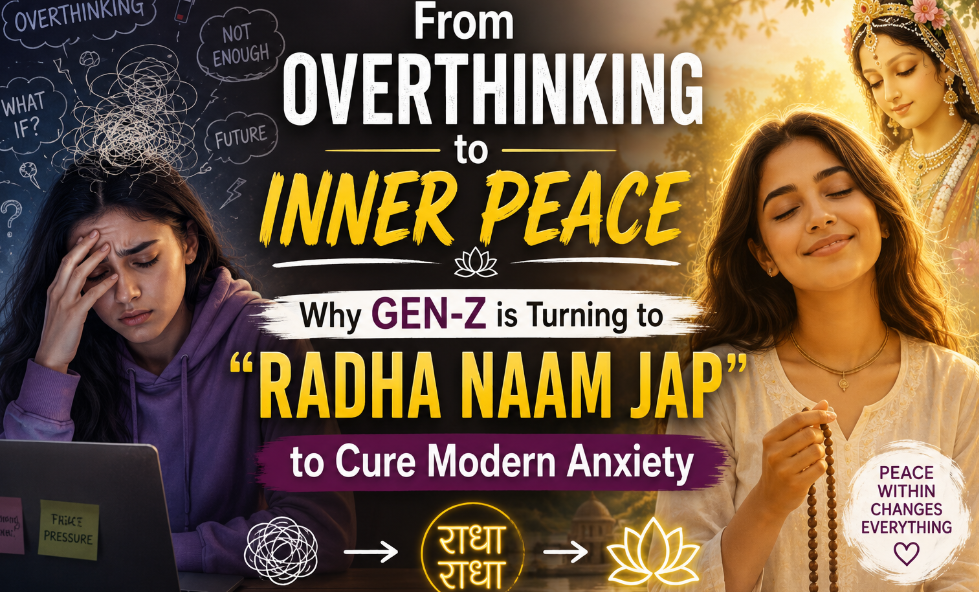
In an era dominated by hyper-connectivity, instant gratification, and an endless barrage of notifications, a silent crisis is unfolding. Generation Z and Millennials are experiencing unprecedented levels of chronic stress, decision fatigue, and existential anxiety. While therapy, meditation apps, and digital detoxes have become mainstream, a surprising and deeply profound counter-culture is emerging online.
Young professionals, students, and digital natives are turning away from complex self-help trends and looking backward—thousands of years backward—to a simple, rhythmic practice: Radha Naam Jap (the repetitive chanting of the name of Radha).
Driven by viral clips of Vrindavan’s beloved saint, Pujya Premanand Ji Maharaj, the practice of “Naam Jap” is transitioning from a traditional ritual associated with the elderly into a powerful, accessible mental health tool for the modern youth.
But why is this happening? Is there science behind the spiritual calm? And how can a digital generation seamlessly integrate this ancient practice into their daily lives? Let’s explore the profound intersection of neuroscience, spiritual devotion, and mental peace.
1. The Modern Crisis: The Cost of a Hyper-Stimulated Brain
Before we can understand the cure, we must examine the disease. The modern brain was not designed to process the sheer volume of data it receives daily. From the moment we wake up and check our phones, our brains are flooded with cortisol (the stress hormone) and artificial spikes of dopamine.
This leads to several mental challenges:
- The “Default Mode Network” (DMN) Overdrive: In neuroscience, the DMN is a network of interacting brain regions active when a person is not focused on the outside world. It is responsible for daydreaming, reflecting on the self, and—when overactive—overthinking, rumination, and anxiety.
- Attention Fragmentation: Constant multitasking trains our brains to have short attention spans, leaving us feeling perpetually scattered and restless.
- Emotional Burnout: Empathy fatigue and the pressure to perform on social media leave the youth feeling lonely, insecure, and emotionally exhausted.
To escape this mental loop, young people are seeking a “cognitive anchor”—something simple, offline (or intentionally focused), and deeply grounding. This is exactly where the practice of Naam Jap enters the picture.
2. What is “Radha Naam Jap”? The Spiritual Anatomy of the Divine Name
At its core, Naam Jap is the meditative repetition of a divine name. In the Gaudiya Vaishnavism tradition and the broader spiritual heritage of India, the name “Radha” is not merely a historical or mythological identifier; it is considered the personification of supreme divine love (Prema), compassion, and absolute cosmic energy.
The word Radha is linguistically derived from the Sanskrit root Radh, which translates to “to worship,” “to bring fulfillment,” or “to bestow joy.” When a practitioner chants “Radha, Radha,” they are not just uttering a word. Philosophically, they are invoking the maternal, loving aspect of the universe. In a world that often feels transactional and demanding, chanting Radha’s name provides a sense of unconditional safety, acceptance, and spiritual warmth.
3. The Science of “Jap”: How Chanting Rewires Your Brain
While the spiritual benefits of Naam Jap are boundless, modern science provides a fascinating look into why this rhythmic repetition of sound waves heals a stressed mind.
A. Calming the Amygdala
The amygdala is the brain’s “fire alarm,” responsible for the fight-or-flight response. When you are anxious or overthinking, the amygdala is hyperactive. Scientific studies on Sanskrit mantra chanting show that rhythmic vocalization stimulates the vagus nerve. The vagus nerve runs from the brainstem down to the abdomen and acts as the brake pedal for your nervous system. Stimulating it lowers your heart rate, reduces blood pressure, and sends a signal to your amygdala that you are safe.
B. Quieting the Default Mode Network (DMN)
By focusing your entire conscious awareness on a single, repetitive sound (“Radha, Radha”), you starve the DMN of the cognitive resources it needs to construct anxious, hypothetical scenarios. It is mathematically and neurologically impossible for the brain to deeply ruminate on past regrets or future anxieties when it is fully engaged in the rhythmic pronunciation of a mantra.
C. Neuroplasticity and Sound Vibrations
Every sound we make creates a physical resonance inside our skulls. The repetition of nasal and vowel sounds in “Ra-dha” stimulates the endocrine system, facilitating the release of beneficial neurotransmitters like GABA (which calms neural activity) and endorphins. Over time, consistent Japa alters the physical structure of your brain—a process known as neuroplasticity—strengthening the neural pathways associated with focus, patience, and emotional regulation.
4. The Premanand Ji Maharaj Phenomenon: Practical Spirituality for Youth
One cannot discuss the resurgence of Radha Naam Jap in the 21st century without mentioning Param Pujya Vrindavan Rasik Sant Shri Hit Premanand Govind Sharan Ji Maharaj.
Living a life of profound humility and intense devotion in the holy town of Vrindavan, his daily Satsangs (spiritual discourses) have taken the digital world by storm. Millions of young people watch his short video clips on Instagram Reels and YouTube daily.
Why does his message resonate so deeply with Gen-Z?
- No Rigid Prerequisites: Maharaj teaches that divine connection is your birthright. You do not need to sit in a forest or abandon your career. You can chant Radha while walking, cooking, commuting, or even working.
- Addressing Real-World Issues: He speaks openly about pornography addiction, academic pressure, toxic relationships, anger issues, and financial stress, offering Naam Jap as the ultimate, practical mental shield.
- Raw Authenticity: His teachings are free of commercialism. He speaks with a fierce, loving authority that cuts through the fake aesthetic of the modern wellness industry. He emphasizes that if you hold onto Radha’s name, your mind will naturally purify itself, and your worldly problems will begin to lose their power over you.
5. Step-by-Step Guide: How to Start Your Japa Practice
Starting a spiritual practice can feel intimidating, but the beauty of Naam Jap lies in its radical simplicity. You do not need complex rituals. Here is a practical, beginner-friendly guide to establishing your daily practice:
Step 1: Choose Your Time and Space
While you can chant anytime, setting aside a dedicated $10$ to $15$ minutes in the morning (during Brahma Muhurta, before sunrise, or simply right after waking up) creates a powerful psychological boundary. Sit in a clean, quiet corner where you feel safe.
Step 2: Mind Your Posture
Sit comfortably with your spine erect. Keeping your spine straight ensures optimal airflow and allows your nervous system to remain both relaxed and alert.
Step 3: Align with Breath and Rhythm
Close your eyes. Gently sync the name with your breath.
- Inhale: Mentally feel the energy of the divine name.
- Exhale: Gently pronounce or whisper: “Ra-dha” (or do it completely silently inside your mind).
- Let the syllables roll smoothly. Focus completely on the sound of the name. If your mind wanders (and it will!), do not get frustrated. Gently bring your focus back to the sound, like a mother guiding a toddler back to her side.
Step 4: Keep Track (Mala vs. Digital Sadhana)
Traditionally, practitioners use a tulsi mala consisting of $108$ beads to keep track of their chants. However, for a generation on the move, carrying a physical mala isn’t always practical. This is where Digital Sadhana comes in.
6. Embracing “Digital Sadhana” with Radhajap.in
In the digital era, technology can either be our greatest distraction or our greatest ally. Instead of using your phone to doomscroll, you can transform your device into an altar of peace.
Using the free, interactive Digital Radha Naam Japa Counter on Radhajap.in, you can gamify and track your spiritual progress.
- The Power of Streaks: Just as social media apps use “streaks” to keep you hooked, you can use our digital counter to build a positive, habit-forming “Japa Streak.”
- Commuting Chanting: Keep your hands and mind busy during bus, train, or metro rides by tapping the digital counter. It serves as a gentle shield against toxic online content and keeps you grounded.
- No Pressure, Pure Progress: Start with just $108$ chants (one round) a day. As you begin to feel the quiet settling into your mind, you can naturally increase your count to $5$, $11$, or even more rounds.
7. Frequently Asked Questions (FAQs) About Radha Naam Jap
Q1. Do I need to be vegetarian or follow strict rules to start chanting?
No. While a clean lifestyle supports mental clarity, there are no rigid dietary or physical prerequisites to start chanting. The divine name is pure and has the power to naturally purify your habits over time. Start exactly where you are.
Q2. Is Radha Naam Jap only for religious Hindus?
Not at all. While rooted in Hindu philosophy, the vibrational, cognitive, and calming aspects of rhythmic sound meditation are universal. Anyone looking for mental peace, emotional grounding, and a connection to loving cosmic energy can benefit from chanting Radha.
Q3. What should I do if my mind keeps wandering during Japa?
This is completely normal! The nature of the mind is to wander. Do not fight the thoughts or get angry. Every time you realize your mind has drifted and you bring it back to “Radha”, you are completing a “mental push-up.” Over time, your concentration will naturally deepen.
Disclaimer & Final Thoughts
Disclaimer: While spiritual practices like Japa are highly effective tools for stress management and mental clarity, they should not replace professional medical advice, diagnosis, or treatment for clinical anxiety, depression, or other mental health conditions.
Your mind is a garden. If you do not actively plant seeds of peace, weeds of anxiety, comparison, and fear will grow naturally. By dedicating just a fraction of your day to Radha Naam Jap, you shut out the noise of the external world and reconnect with a reservoir of quiet joy that lives inside you.
Step away from the screen, take a deep breath, and start your journey inward today.
Radha Krishna bhakti has always been the center of my life, and that’s why I founded Radhajap.in. I’m Vikas, and I believe in the divine power of Naam Jap to transform hearts and bring us closer to Radha Krishna. Through Radhajap.in, I aim to inspire every devotee to embrace a life filled with love, devotion, and the bliss of chanting.